How to Select a Frameless Torque Motor for an OEM Direct-Drive Axis
A practical selection guide for engineers comparing frameless torque motors by torque-speed duty, OD/ID geometry, winding, cooling path, and RFQ readiness.
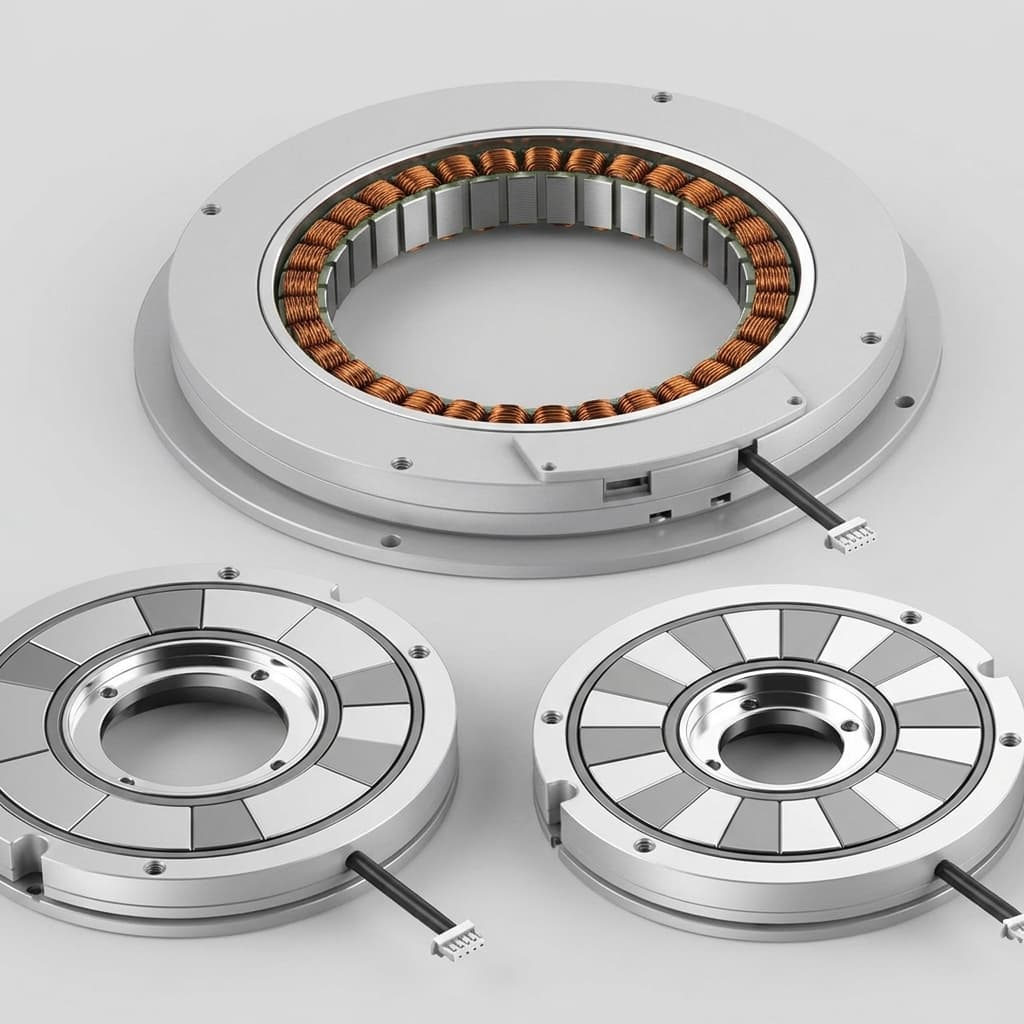
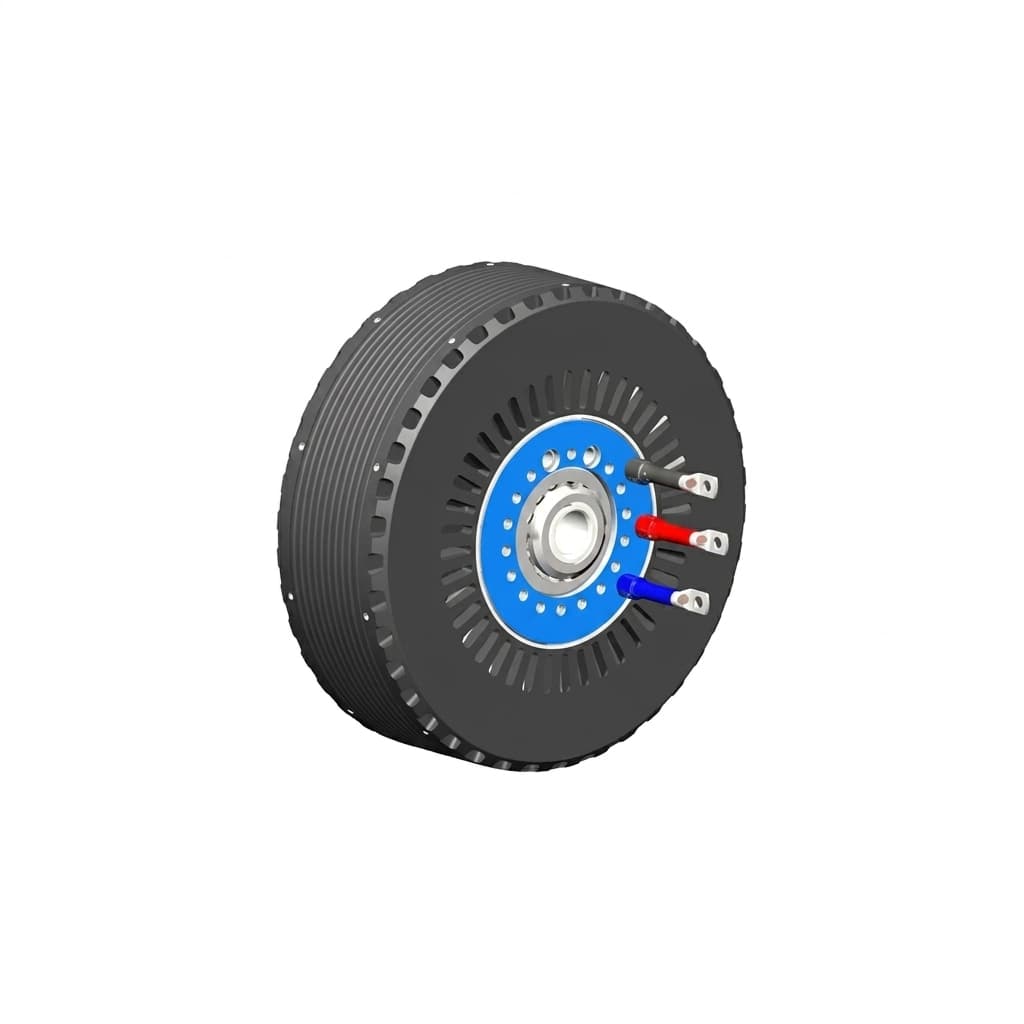
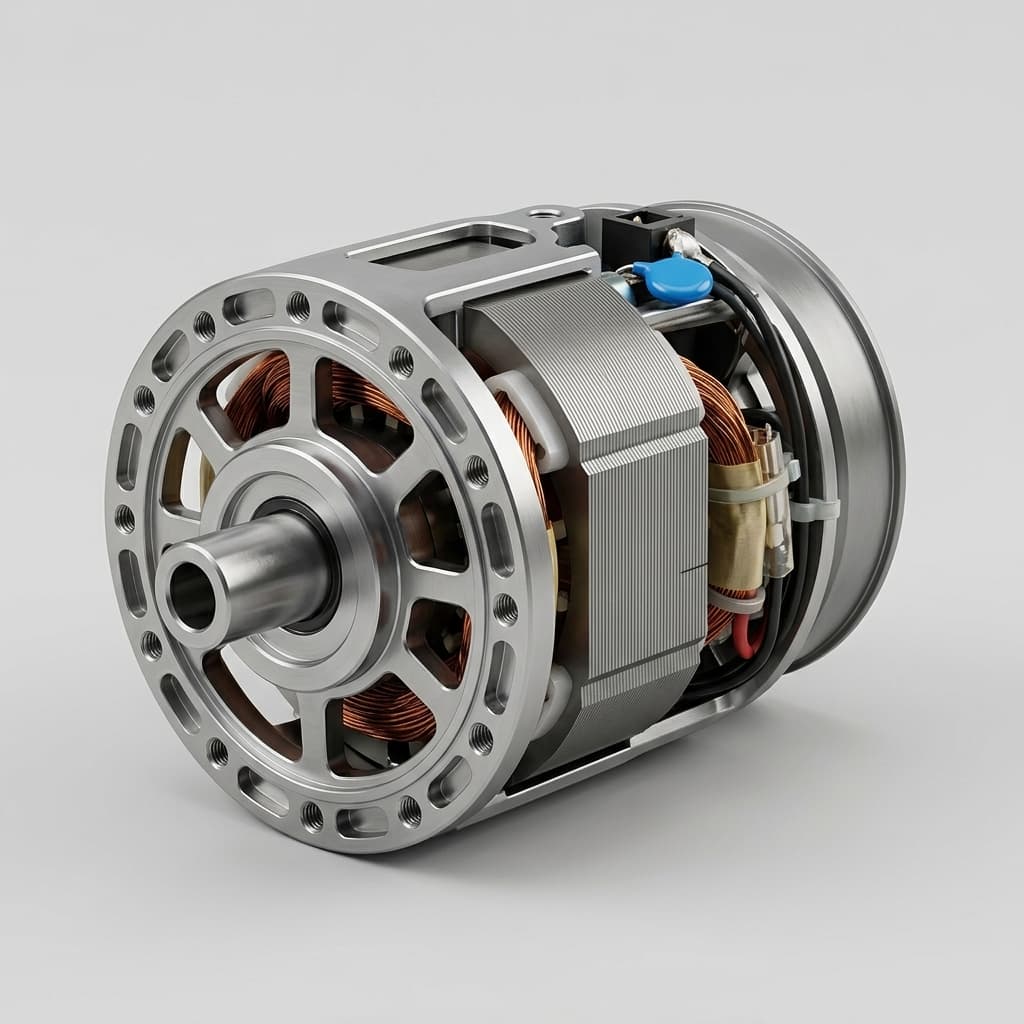
Choosing a frameless torque motor is not the same as choosing a catalog servo motor. You are selecting a rotor and stator kit that must become part of your mechanical structure, thermal path, encoder stack, and control loop.
For OEM buyers, the best early decision is to evaluate the motor as part of the whole axis. A motor that looks strong on a torque table can still fail if the housing cannot remove heat, the rotor cannot be clamped safely, or the drive voltage does not match the winding.
Here is the sequence I use when reviewing a buyer's first frameless motor inquiry. It keeps the discussion close to the real axis instead of drifting into catalog numbers that cannot survive prototype testing.
Frameless torque motor selection flow
A practical order for turning machine requirements into a useful RFQ.
Do not start from peak torque alone. The first sizing question is the load profile:
Input
Why it matters
Continuous torque
Defines sustained thermal load.
Peak torque
Defines acceleration and transient margin.
Target speed
Affects back EMF, voltage headroom, and drive choice.
Duty cycle
Separates short bursts from continuous operation.
Cooling method
Determines whether the quoted torque is realistic in your housing.
If the axis has multiple operating modes, separate them. For example: idle hold, normal motion, fast indexing, emergency stop, and calibration.
A better way to describe duty is:
Mode
Torque
Speed
Duration
Repeat rate
Notes
Hold
Continuous holding torque
0 rpm
Long duration
Constant
Usually thermal-limited
Move
Running torque
Target rpm
Seconds
Per cycle
Include acceleration and load inertia
Peak event
Peak torque
Low or changing speed
Milliseconds to seconds
Occasional
Defines overload margin
Index
Torque during acceleration and deceleration
Variable
Per move
Cycles per hour
Important for rotary tables
The supplier does not need a perfect model at the first contact, but they do need enough information to avoid quoting a motor that only works in a short burst.
Frameless motors are attractive because they remove the external motor housing. That also means the customer housing becomes part of the motor system.
The most important geometry fields are:
Outside diameter (OD)
Inside diameter (ID)
Stack length
Available axial space
Rotor mounting method
Stator retention method
Cable, optical, bearing, or encoder pass-through requirement
If the ID is driven by a bearing, cable bundle, slip ring, reducer, or optical path, include that information in the first RFQ. A hollow-shaft requirement can change the electromagnetic design direction.
The tradeoff is simple: a larger ID can reduce electromagnetic area. To recover torque, the design may need more OD, more stack length, stronger magnets, different winding, better cooling, or a different mechanical layout.
This is why "similar to this motor, but with a bigger hole" is not a small request. The aperture is part of the motor design.
A winding choice is not just a line item. It connects torque constant, back EMF, resistance, inductance, speed, and drive current.
Useful RFQ fields include:
DC bus voltage
Maximum continuous and peak current
Servo drive model or current limit
Target speed range
Control mode
Encoder, Hall, resolver, or sensorless plan
If your drive current is limited, a higher torque constant winding may help. If your speed is high, back EMF can become the limit. The motor supplier should review both sides together.
Common winding mistakes include:
Mistake
What usually happens
Choosing high Kt without checking top speed
Motor cannot reach speed at available bus voltage
Choosing high speed winding without checking current
Drive overheats or cannot deliver required torque
Ignoring inductance
Current control becomes harder at the target switching frequency
Treating peak current as continuous current
Thermal estimate becomes unrealistic
Changing drive model after sample approval
Winding selection may no longer be optimal
If your drive model is fixed, send the datasheet or the current/voltage limits. If your drive is not fixed, ask the supplier what electrical range would make the motor easier to quote.
A frameless motor usually transfers heat through the stator into the customer housing. Continuous torque is only meaningful when the thermal path is defined.
Ask the supplier to clarify:
Cooling condition used for any continuous torque estimate
Winding temperature assumption
Housing material and contact method
Whether potting or thermal interface material is expected
Temperature rise test basis when available
For high duty applications, do not accept a torque number without asking how heat leaves the motor.
Ask for the thermal basis in plain language:
Was the torque estimated in free air, mounted housing, or forced cooling?
What winding temperature is allowed?
What ambient temperature is assumed?
Is the stator bonded, clamped, press fit, or potted?
Is the housing aluminum, steel, plastic, or another material?
Are there nearby heat sources inside the machine?
If the answer is unclear, treat the continuous torque value as a preliminary number. For production programs, sample validation should include temperature rise under your actual duty cycle.
The biggest assembly risks are not always visible on a datasheet. Exposed permanent magnets can pull tools or parts unexpectedly. Air gap error can reduce performance or cause contact. Rotor axial movement can damage the motor. Lead wires can fail if strain relief is ignored.
Before a paid sample, align on one of these sample goals:
Sample goal
What to verify
Mechanical fit sample
OD/ID, stack, lead exit, mounting method, air gap access
Electrical validation sample
Winding, resistance, inductance, back EMF, drive compatibility
Thermal sample
Continuous duty in customer housing
Full axis prototype
Motion control, encoder, load, thermal, and assembly process
Trying to validate all four with an unstable drawing set usually causes delays.
Many buyers ask for CAD first. In practice, CAD is only useful when the intended configuration is clear.
A productive first request is:
Datasheet or preliminary parameter table
2D mounting drawing
STEP or IGES model for the selected configuration
Torque-speed curve for the proposed winding
Any available test report or inspection plan
If the motor is custom, use the CAD file as a controlled engineering artifact tied to a model, revision, and project name.
Use this request format:
Please share the drawing package for project [project name], motor family [candidate family], revision [drawing revision], with OD [value], ID [value], stack length [value], lead exit [position], and CAD format [STEP/IGES].
That is much better than "send CAD," because it keeps the mechanical package tied to the quoted configuration.
A catalog-like frameless motor is a good starting point when the geometry, speed, and torque target are close to an existing family. Custom engineering becomes valuable when you need a specific OD/ID ratio, winding, stack length, lead wire exit, sensor interface, or mounting geometry.
What information should I send before asking for a frameless torque motor quote?
Send the application, OD, ID, stack length, continuous torque, peak torque, target speed, duty cycle, bus voltage, current limit, cooling method, sensor plan, sample quantity, and annual forecast. If some values are unknown, mark them as TBD and explain which dimensions are fixed.
Why can two frameless torque motors with similar size have different continuous torque?
Continuous torque depends on winding temperature, cooling condition, housing contact, duty cycle, and mounting method. A motor tested in a good aluminum heat path can show a different continuous torque than the same motor in a sealed plastic or poorly conducting housing.
When should an OEM buyer choose a custom frameless motor instead of a standard family?
Custom review is worth it when OD, ID, stack length, lead exit, winding, sensor interface, air gap, or mounting geometry is constrained by the machine. If geometry and electrical limits are flexible, an existing product family is usually a faster starting point.
Is peak torque enough to select a frameless torque motor?
No. Peak torque only describes short overload capability. Selection also needs continuous torque, speed, duty cycle, thermal path, drive current, voltage headroom, and mechanical integration method.
Can CAD be provided before the final motor is selected?
Preliminary drawings can be shared after the candidate family and envelope are clear. For custom programs, CAD should be tied to a project name, revision, OD, ID, stack length, lead exit, and selected winding direction.
Author
Jimmy Su
Frameless torque motor sourcing and application engineering. 10+ years in industrial motion control supply chain between China and global OEM markets.